URL slug: the readable path that identifies a page
A URL slug is a human-readable path segment that identifies particular content. In https://example.com/guides/air-conditioner-cleaning, air-conditioner-cleaning is the article’s slug. Terminology varies between systems; a slug is neither the whole URL nor the search-result title.
Also known as: Slug · Readable URL segment
At a glance
- Use a concise, understandable slug that matches the content.
- Changing a published address is a move, not merely a copy edit.
- A slug does not replace a title, useful content or canonical URL management.
On this page
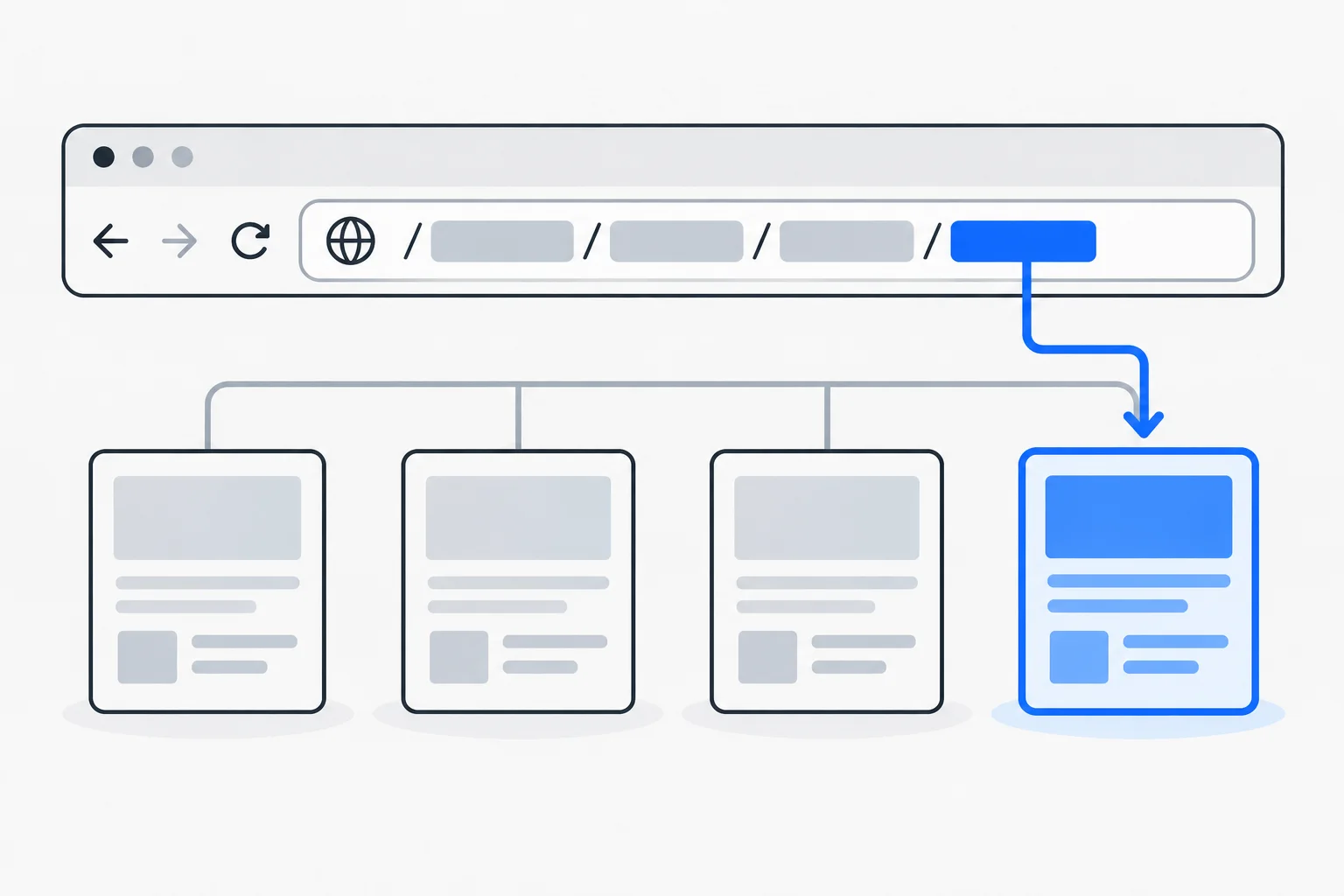
Which part of the address is the slug?
A URL can contain a scheme, domain, path, query parameters and fragment. In editorial work, “slug” commonly means the readable path segment assigned to a page. A CMS may suggest it from the title, but it remains a separate field.
In https://example.com/guides/coffee-machine-cleaning?utm_source=newsletter, the domain identifies the site, guides provides organization, coffee-machine-cleaning is the content slug, and the query can carry campaign information.
Choose a useful, stable name
A reader should be able to infer the subject. heat-pump-maintenance is more informative than new-article-final-2. That does not mean inserting every possible keyword.
Google recommends simple, descriptive URL structures and hyphens between words. URL guidance Accent-free slugs are a common operating choice on Hungarian sites, but not a universal Google requirement. Correct encoding and consistency matter.
Include a year when the content truly belongs to that year. An unnecessary year in a maintained definition can create pressure for an avoidable future move.
Slug, title and canonical URL
The title tag names the HTML document. The visible heading introduces the content. The slug is part of its address. Their meanings should align, but their characters need not match.
An article titled “When and how should you clean a coffee machine?” can use coffee-machine-cleaning. The title can evolve while the address remains suitable.
A canonical URL is the full preferred address for content. Choosing a readable slug does not settle relationships between duplicate versions. Canonicalization
Example: a ceramics workshop
Imagine a workshop replacing the draft slug october-blog-final with cleaning-ceramic-mugs before publication. Six months later, it adds dishwasher guidance. The heading becomes more precise, but the existing slug still fits.
If the published address is renamed, handle the old URL too. A suitable permanent redirect and updated internal links support an orderly move. Redirect guidance
Avoid unnecessary complexity
Very long slugs are difficult to scan and share; overly general ones fail to distinguish pages. A few precise words usually work better than an entire summary.
Handle letter case, trailing slashes and renamed addresses consistently. Do not assume every server treats similar-looking paths as identical. Open the actual shared URL to verify it.
When is a change worthwhile?
Choose thoughtfully before publication. For an established address, weigh readability gains against migration work and broken-link risk. A slightly long working path may be less harmful than an unnecessary move.
A slug supports clear URL management within SEO. It cannot replace a useful topic and an accurate answer.