Search results and measurement
Traffic source: identify the origin and scope of a visit
Traffic source describes the origin of a website visit or another measured touchpoint. It may identify a search engine, newsletter or referring website, while medium describes the delivery type. Interpretation also requires knowing which user acquisition, session or event the report concerns.
Also known as: traffic source · source / medium · source and medium
At a glance
- Source identifies a specific origin; medium describes the delivery type.
- First-user source and the current session’s source can differ.
- Recorded origin is not a complete history of how a customer reached a decision.
On this page
What are source and medium?
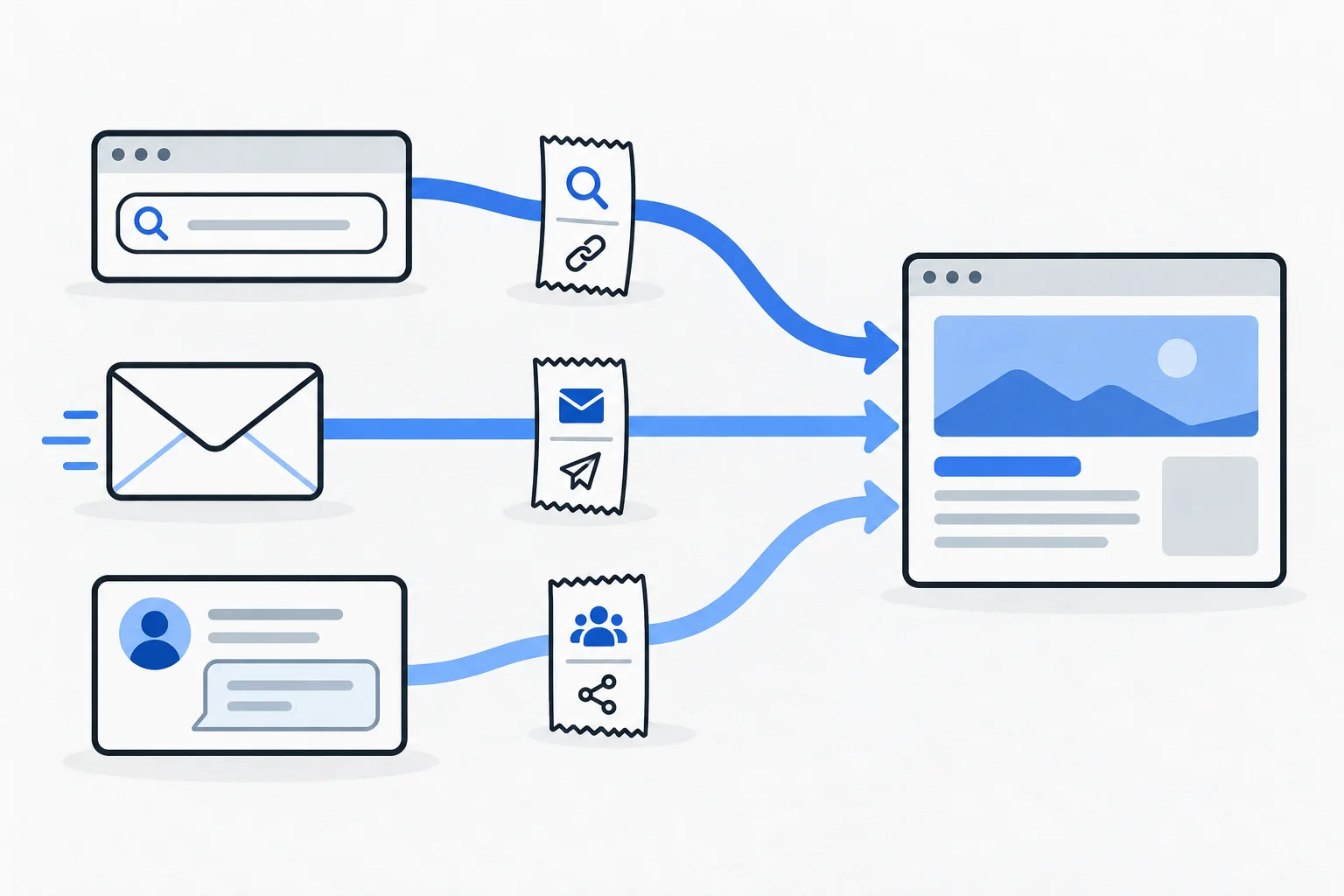
Source identifies an origin, such as a search engine or a named newsletter. Medium identifies the delivery method, such as organic search or email. Together they usually communicate more than either alone.
Google Analytics source dimensions describe origin at different scopes. A source/medium pair is more detailed than a channel group combining several sources. Choose the level appropriate to the decision.
Why does scope matter?
Someone can first arrive through search and return later through email. First-user acquisition describes the initial arrival; the current session source can describe the later return. An event-attributed source may follow another set of rules.
Do not automatically compare two columns merely because both say “source.” Read the full dimension name, system definition and report objective. Discovering how people first found the business differs from identifying which email brought them back this week.
Example: a returning language-school prospect
Imagine someone clicking an organic result about language exams, subscribing and opening a course page through the following week's newsletter.
Looking only at first-user source understates the email's role in the return. Looking only at the last session can obscure the initial research. Both views can be valid when their questions are clear.
This fictional example illustrates reporting scope rather than an observed customer outcome. State the question in the report title instead of treating every source table as a competition for all the credit.
How is origin recorded?
Analytics can use referrer information, manual campaign parameters or supported automatic tagging. UTM parameters explicitly identify campaigns. Apply a consistent convention and test the actual destination link.
Missing source information limits interpretation. Forwarded links, redirects that strip parameters and journeys continuing on another device can leave only part of the story visible.
A system's classification is an observation under its rules, not necessarily a complete account of the person's experience.
What does a source report not prove?
Many visits from a source do not establish commercial value. A broad article may attract people outside the business's offer, while a small specialist partner may send fewer but more relevant prospects.
Attribution affects credited outcomes. An observed relationship between source and purchase is not automatically proof of causal impact. Consider inquiry quality, costs and other customer evidence.
How should comparisons be prepared?
Align the period, dimension scope and goal. Keep outcome counts beside visit counts and retain campaign-tagging conventions. Investigate a newly appearing source or campaign before crediting it with meaningful performance.
For content planning, examine the landing page and underlying question. These can reveal which explanations attract relevant readers and where a clearer next step is needed. The source name alone rarely determines the next article worth writing.