Search results and measurement
Lab data: meaning, examples and practical use
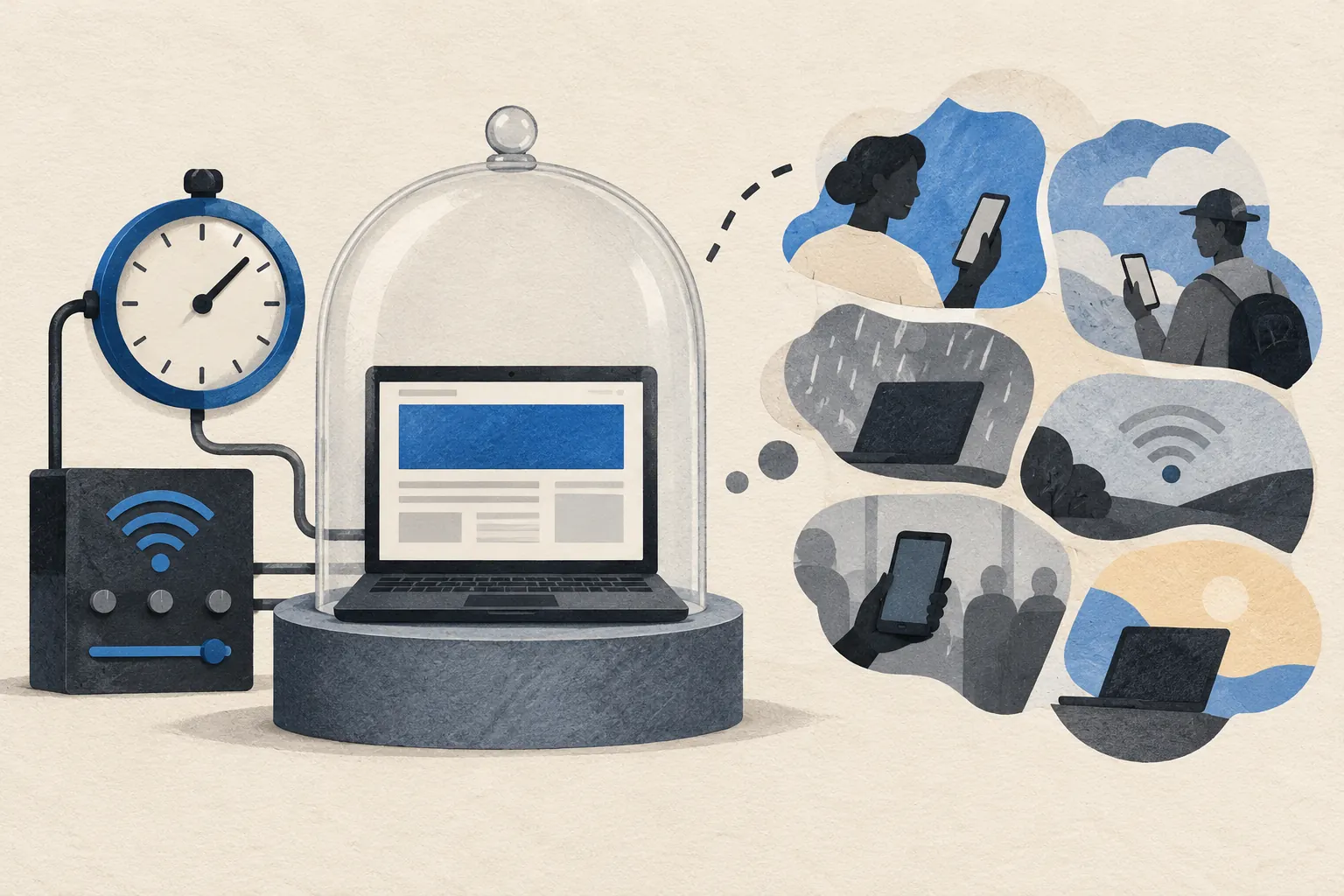
Lab performance data comes from observing a webpage in a controlled test environment. Defined device, network and test settings support diagnosis and comparison, but one run does not represent every real visitor.
Also known as: Laboratóriumi mérés
At a glance
- Controlled tests support diagnosis and comparison.
- Results belong to the conditions under which the test ran.
- One run or a high score does not establish a good experience for everyone.
On this page
What can be controlled?
The URL, device profile, network constraints and initial cache state. Lighthouse can provide this kind of audit and diagnostic report. Recording the conditions helps determine whether an observed difference represents a meaningful change.
How should two versions be compared?
Use matching settings and comparable environments. Several runs can expose variability, but unnecessary repetition does not repair a poor method. Do not compare development mode with an optimized production build as though the proposed edit were the only difference.
Example: a smaller opening image
Imagine an article receiving a new compressed image. Under the same test conditions, the team compares transferred size, visual quality and LCP. It checks whether the image was actually causing the delay, rather than assuming fewer bytes must explain every improvement.
What are the limitations?
Actual devices, locations and interactions vary. Field data describes what happened for the measured visitor population. A laboratory result proves something about a particular test, not every network or person. Use the controlled test to investigate causes and real observations to assess the broader experience.