Search results and measurement
What are Google free product listings?
Free product listings are opportunities for eligible products to appear on supported Google surfaces without the merchant paying for that particular unpaid placement.
Also known as: free listings · unpaid product listings
At a glance
- Free listings differ from paid Shopping campaigns.
- Product data and landing pages must meet the applicable requirements and describe the same offer.
- Eligibility, an impression, a click and a purchase are separate events.
On this page
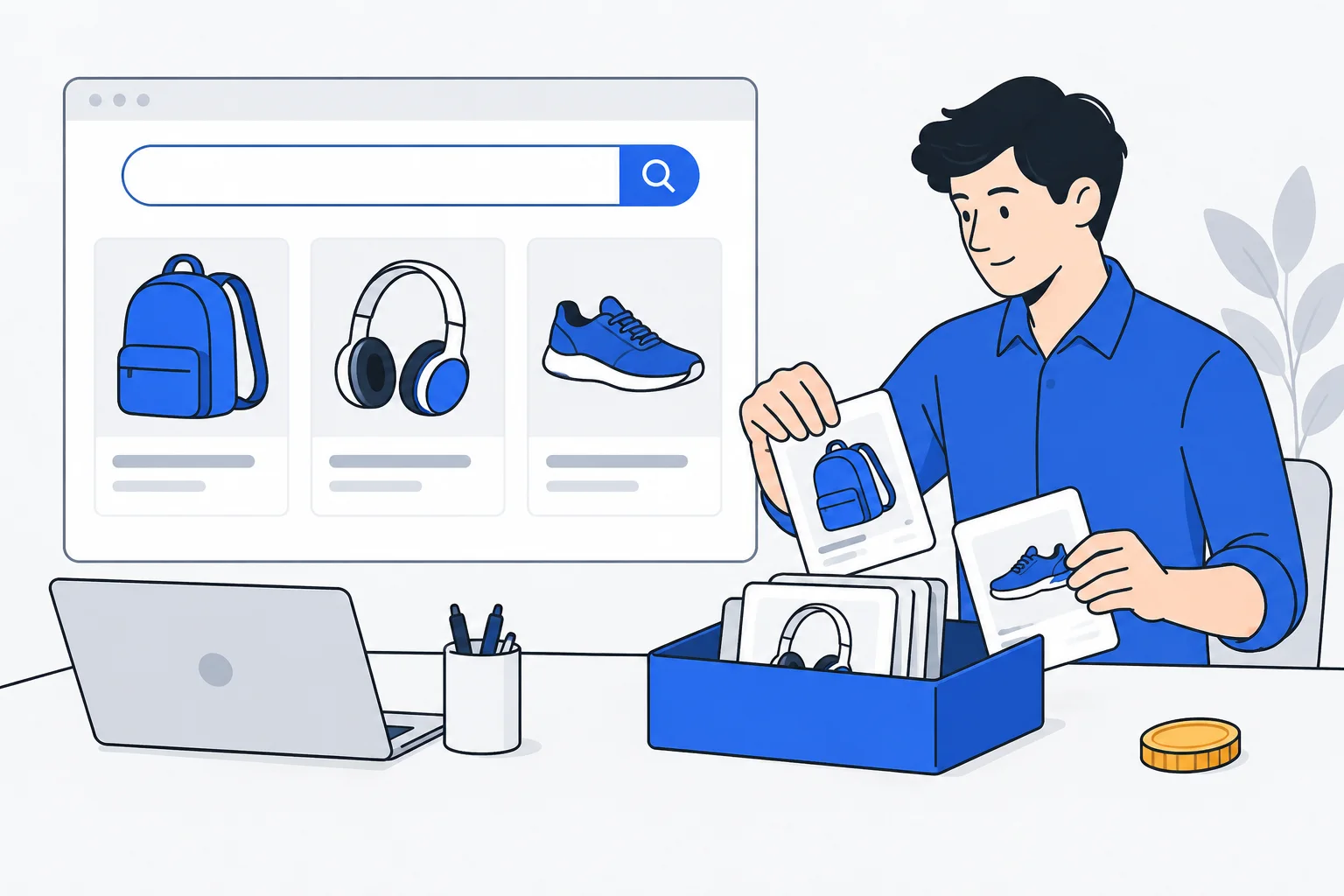
What is free about a free listing?
The term refers to the unpaid product placement. Running a shop, maintaining product information and fulfilling orders still have costs.
According to Google’s guidance, eligible products can appear on supported surfaces. Availability and presentation can change. Enabling the option does not reserve a position for a particular search.
How do listings differ from other results?
| Type | What it represents |
|---|---|
| Free product listing | An unpaid opportunity based on product information. |
| Shopping ad | A placement associated with a paid advertising campaign. |
| Organic web result | A webpage selected as a search result. |
| Category page | A page on the merchant’s own website organizing several products. |
These can be connected without being interchangeable. A product page can appear as a normal web result while its product data supports other shopping experiences. An explanatory article serves another purpose from a specific item that can be purchased.
What does useful product data require?
Accurate titles, images, destination URLs, prices and availability are basic information; the current specification determines the full requirements. Applicable shipping information and accessible return conditions also need attention. Requirements can depend on the country and listing program, so use the current guidance for your target market.
The product feed and destination page should describe the same offer. A mismatch is more than a reporting problem: the customer can arrive expecting a different price or product.
Merchant Center helps manage product data and diagnose issues. A successful upload does not establish that every submitted item is eligible. Check item-level problems after submission.
An example: a backpack listing
Imagine a sports shop supplying accurate data for a city backpack. The product page shows the same color, price and availability as the data source.
That consistency is a useful foundation. It does not show how many people will see the listing. If someone later clicks, that establishes a visit through the placement, not a completed order.
A visitor might compare alternatives, want a different size or find the delivery conditions unsuitable. A click without a purchase does not identify one particular cause.
What should you evaluate?
Keep impressions, visits and conversions separate. Reports can count different actions or use different periods, so their totals may not be directly comparable.
Improve a concrete issue: missing data, an inconsistent price, an unclear product description or a difficult destination page. A useful category page and supporting buying guide can help shoppers make a choice, but neither replaces accurate product fundamentals. Assess the customer path as well as the listing’s technical status.