What is the local pack in Google Search?
The local pack is a Google Search feature that presents local businesses or places, often alongside a map, when the query is interpreted as having local intent.
Also known as: local pack · map pack · local results pack
At a glance
- The layout and number of businesses can vary; it is not always a fixed three-result block.
- A local-pack appearance is different from a website’s organic search position.
- Location and query context can change which businesses appear.
On this page
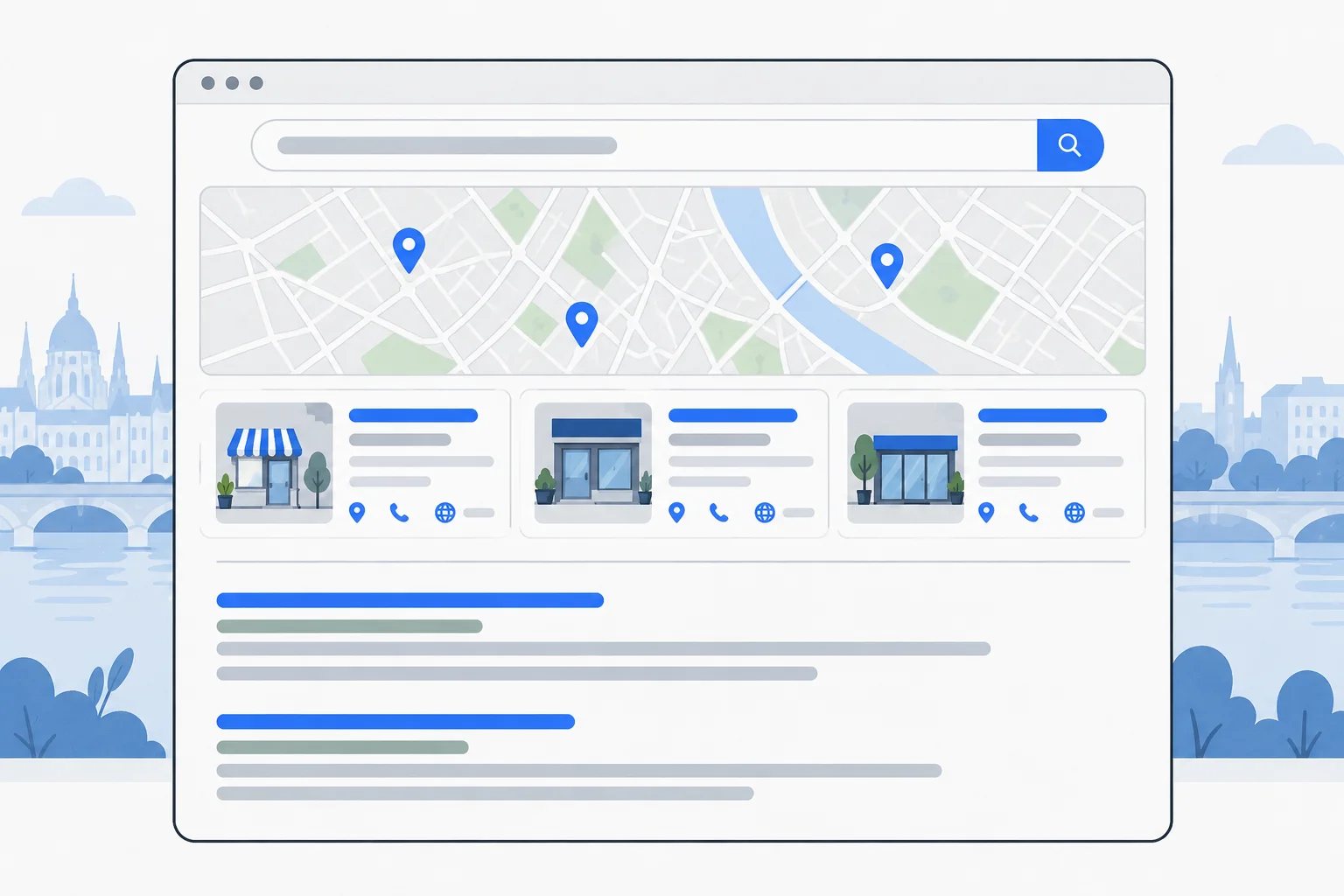
What does the local pack look like?
A search such as “breakfast nearby” or “tire service in Veszprém” may show a map with business names, categories, ratings and other relevant details. The exact layout and number of entries can change with the query, device and search experience.
The familiar “three-pack” nickname describes a common presentation, not a rule that every local result must contain exactly three businesses.
How is it different from a normal web result?
An ordinary organic result usually takes the searcher to a webpage. A local result can help someone request directions, review hours or inspect a business profile without visiting the business’s own site.
These are different customer paths. A page ranking for a local term does not prove the business appears in the local pack. Likewise, a map appearance does not establish the website’s organic position.
Google Business Profile and your own service pages should complement one another: concise business facts in the profile, fuller explanations and appropriate actions on the site.
Why do the businesses change?
Google describes local ranking through relevance, distance and prominence. A search made downtown can produce different results from one made in the suburbs. “Open now” can also imply different needs from a general research query.
If you record a result for comparison, retain the exact query, location, device and time. Even that record is a sample of one experience, not a complete account of every customer’s search.
A changed order is not automatically evidence of a penalty or a mistake in the business profile.
A practical example
Imagine a tire-shop owner who searches from the workplace and sees the shop near the top of a local block. At home, the owner repeats the query and sees a different order.
The changed search location is an obvious variable to investigate. Before declaring a lost ranking, compare results under similar conditions and check whether the profile accurately describes services, hours and walk-in arrangements.
The example does not show that the business gained or lost calls. Exposure, profile interactions and completed customer actions need their own evidence.
Which distinctions matter when reviewing results?
A place existing in Google Maps, a business having a managed profile, and that business appearing in a particular local pack are three different states. Do not use one as proof of the others.
Advertising is also separate from unpaid local ranking. A paid placement should be recognized by its advertising label; it does not mean a business has bought an organic local position.
Finally, an impression does not establish that someone read the details, visited the premises or purchased anything.
What can a business improve?
Maintain the real business name, appropriate categories, address or service area, and accurate hours. Google may obtain information from several sources, so check important external listings as well as your own profile.
On the website, explain what the business actually offers and make the next action clear. Local SEO is more useful when it helps a person choose and contact the right business than when it focuses exclusively on one observed map position.